


Buy Now, Pay Later: How Does It Fit Into Your Budget?
You’ve found the perfect gift, added it to your cart, and headed to checkout. Then you see an offer: split your purchase into four smaller payments.
Paying $25 today might feel easier than spending $100 all at once. But before you select “buy now, pay later,” take a moment to consider how those payments will fit alongside groceries, bills, and your other holiday purchases.
Understanding the full commitment can help you decide whether a payment plan works for you.
How does buy now, pay later work?
Buy now, pay later, often called BNPL, is a type of installment loan. It lets you receive a purchase now and repay the cost through scheduled payments. Some plans divide the total into four payments, while others offer longer repayment periods. Interest, fees, and payment schedules vary by provider and plan.
For example, a $100 purchase might require $25 at checkout, followed by three additional $25 payments every two weeks. In this example, there are no interest charges or fees, so the total remains $100.
The smaller payment changes when you pay. It doesn’t change how much you’re spending.
Small payments can add up
One payment plan may seem manageable. Several purchases across different stores can create a bigger commitment than you intended.
Imagine making these purchases during the same shopping weekend, each divided into four equal payments:
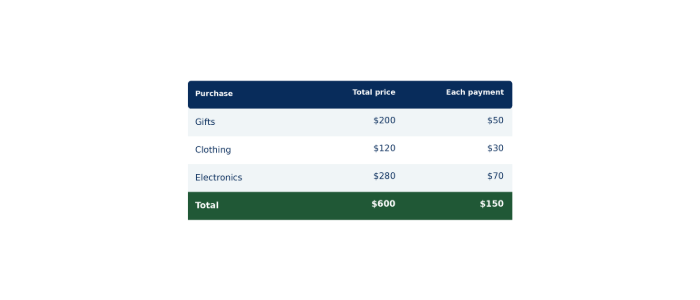
Illustrative example assumes no interest or fees.
If these plans follow the same schedule, you would pay $150 at checkout and another $150 every two weeks for the next three installments.
Before adding another purchase, consider the combined payment amount and the total you still owe across every plan.
What should you review before agreeing?
Take time to read the terms, even when you’re eager to finish shopping. Look for answers to these questions:
What is the total cost? Check for interest and fees, including charges for late payments or changing a payment date.
When are payments due? Compare every due date with your paydays and regular bills.
Are payments automatic? Know which account or card will be charged. Depending on your account terms, an automatic withdrawal could trigger an overdraft or insufficient funds fee if your balance is too low.
Could it affect your credit? Ask whether the provider checks your credit or reports payment activity. Reporting practices vary, and missed payments or debt collection may affect your credit.
How do returns and refunds work? Review the process for a returned, damaged, or missing item, including how payments are handled while the issue is being resolved.
Save a copy of the agreement so you can refer to it later.
Make room for payments in your budget
Before committing, write down each installment amount and due date alongside your other expenses. Include plans from every provider, even if they appear in separate apps.
Then ask yourself:
Can I cover every payment while paying for essentials?
Am I relying on money I’m not sure I’ll receive?
Would I still buy this item if I had to pay the full price today?
Could I wait, save for it, or choose something less expensive?
Approval for a payment plan doesn’t tell you whether it fits comfortably into your household budget. Your upcoming expenses matter just as much as today’s account balance.
Already using several plans?
Start by making one list of your remaining balances and payment dates. Set reminders, review automatic withdrawals, and consider pausing new installment purchases until your current commitments are paid off.
If you expect trouble making a payment, contact the provider before the due date to ask about available options.
Give your future budget a little breathing room
Buy now, pay later can spread out a planned expense, but it can also make it easier to spend beyond your original budget. Understanding the terms and keeping all your payments in view can help you make a more informed choice.
Have questions about managing upcoming expenses or exploring borrowing options? Connect with ICCU before your next purchase. Call 989-773-5927, stop by an office, or visit ICCUonline.com to start a conversation with our team.